Home / Stucco Painting
Stucco Painting in Hollister, CA
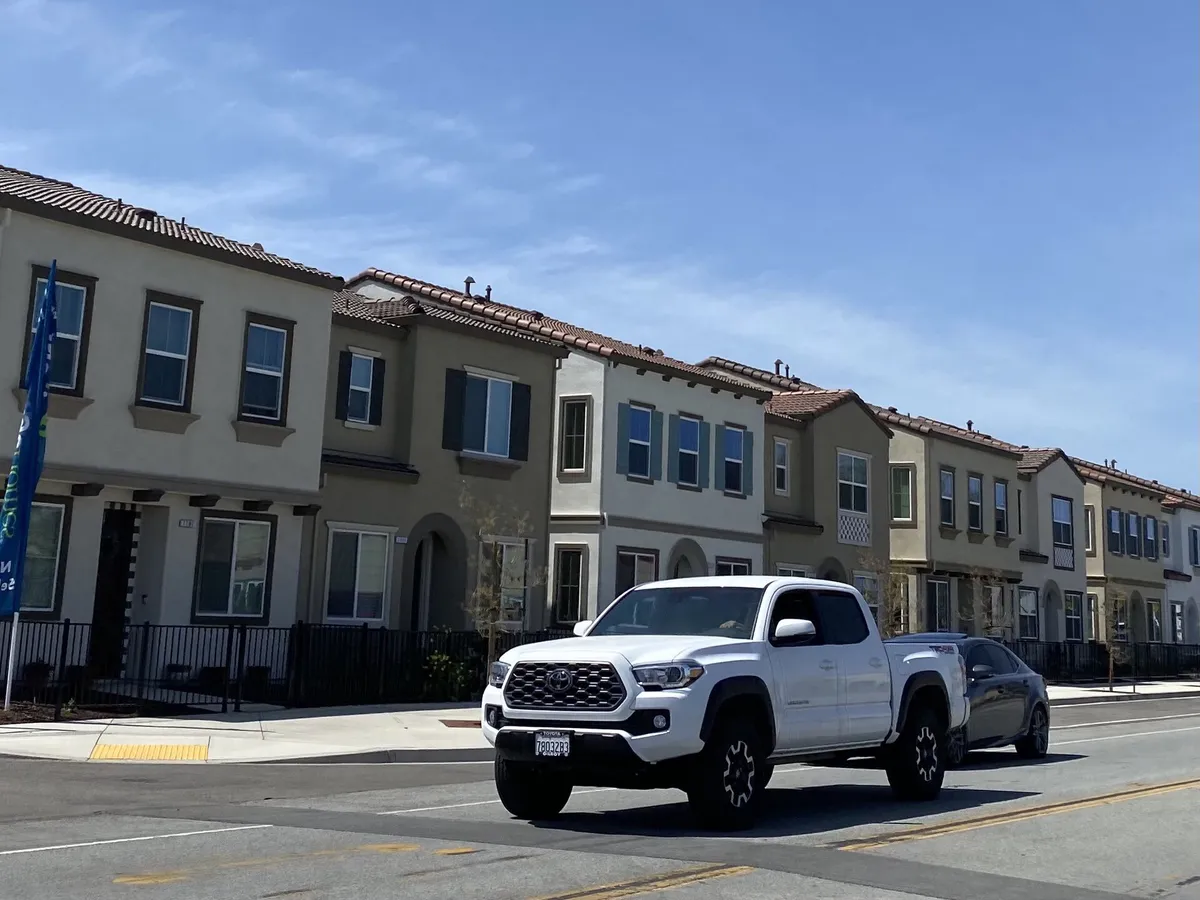
Stucco is the most common exterior wall in Hollister, from Ridgemark's Mediterranean homes to the townhome rows in newer subdivisions. It holds paint well when the cracks, chalk and moisture are dealt with first.

Stucco cracks and the Calaveras fault
Hollister is one of the few towns where you can see a fault moving. The Calaveras fault creeps slowly through the city, and geologists have documented offset curbs, bent sidewalks and cracked walls along its trace near Dunne Park and around Fourth and Locust streets. The movement is gradual, measured in millimeters per year, but it never stops.
For a painter, that matters in a practical way. Most stucco cracks around town are ordinary: shrinkage cracks from curing, cracks at window corners, and cracks where framing settled. Those can be filled and painted and will usually stay closed. A wall near the fault trace, or any crack that has been patched before and reopened in the same line, is likely moving. We will tell you which is which on the estimate, use flexible fillers and coatings where they help, and not promise a permanent fix for a wall that will keep shifting.
How stucco is prepared and painted
- Wash off chalk and dust. Stucco texture holds dirt. A thorough wash and a full day of drying come first.
- Check for moisture. White salt stains (efflorescence), dark patches near the ground, or soft spots point to water coming in from sprinklers, gutters or failed flashing. That source gets fixed before paint goes on.
- Repair cracks. Hairline cracks are filled with an elastomeric patching compound and textured to match. Wider cracks are opened, filled and textured. Spider-web cracking may call for a full elastomeric coat.
- Prime. Patched areas and any bare or chalky stucco get a masonry primer so the finish bonds evenly and does not flash.
- Two finish coats. Applied by spray and back-rolled into the texture so there are no thin spots or pinholes in the stucco.
Acrylic or elastomeric?
| 100% acrylic | Elastomeric | |
|---|---|---|
| Best for | Sound stucco with few cracks | Walls with many hairline cracks |
| Film | Normal thickness, breathes | Very thick, stretches over small cracks |
| Watch out for | Will not bridge cracks | Can trap moisture; harder to repaint later |
| Cost | Lower | Higher material and labor |
Neither coating stops structural movement. Both need clean, dry, primed stucco.
Colors for stucco homes here
Warm neutrals, sand, terracotta and soft whites fit the tile roofs that are common in Ridgemark and downtown. Dark colors look striking but run hotter on Hollister's sunny south and west walls, which stresses both the paint and the stucco. If you have an HOA, check its approved palette first; many Hollister subdivisions have one. The exterior house painting page covers trim, fascia and doors, and the cost guide shows how crack repair affects the price.
Questions Hollister homeowners ask
Should I use elastomeric paint on my Hollister stucco?
Sometimes. Elastomeric coatings are thick and stretchy and can bridge hairline cracks, which helps on walls with lots of fine cracking. They also trap moisture if the wall cannot breathe and can be hard to repaint over later. On sound stucco with few cracks, a quality 100% acrylic is often the better choice.
Why do the cracks in my stucco keep coming back?
Some stucco cracks are from shrinkage when the stucco cured and stay put once filled. Others come from movement, and in parts of Hollister that includes slow creep on the Calaveras fault. Moving cracks will reopen. Flexible patching slows that down, but it cannot stop the ground.
Can you paint stucco that has never been painted?
Yes. Bare stucco, including color coat that has faded, is cleaned, patched and primed with a masonry primer, then painted. The first paint job uses more paint than a repaint because the stucco absorbs so much.
What is the white powder on my stucco?
Usually one of two things: chalk from old paint breaking down in the sun, or efflorescence, which is mineral salt carried out of the stucco by moisture. Chalk washes off and gets a bonding primer. Efflorescence means water is getting into the wall, and the source should be found before painting.
Have cracked or chalky stucco?
Call (831) 555-0123 or send the short form. Estimates are written and free.